
 Reviewed By Joana Garrido DVM
Can dogs have almond milk? Pawrents can share almond milk with their dogs as long as it is done in moderation. This beverage offers antioxidants and other nutrients that aid in improving their health.
However, dog owners should note down not only the health benefits of almond milk, but also its downsides. This way, they can ensure that their pets can enjoy it without suffering from any side effects.
3 Health Benefits of Almond Milk for Dogs

Why can dogs have almond milk? Almond milk houses several nutrients that can give canines a health boost. Here are some health benefits your pooch can acquire from drinking this beverage:
1. Stronger Bones
Almond milk provides good amounts of vitamin D to dogs. Research found that almond beverages rank second-highest among plant-based drinks in terms of vitamin D content.
According to Food Data Central, 1 cup of almond milk contains approximately 2.62 micrograms of this mineral.
Vitamin D is one of the nutrients crucial for maintaining strong bone health in dogs. It works by aiding the intestines to efficiently absorb calcium and phosphorus and ensuring stable balance and retention between the two.
2. Improved Immune Response
Your furry friend can obtain healthy amounts of antioxidants from drinking almond milk.
According to a study, this plant-based drink’s vitamin E levels range between 1.2 and 6 milligrams, while vitamin A can reach approximately 60 to 180 milligrams.
Both of these nutrients play an integral role in maintaining a healthy immune system in dogs.
They help fight off free radicals, which cause oxidative stress and damage to cells. In doing so, they protect the canine body from developing ailments.
3. Minimizes the Chances of Triggering Lactose Intolerance
During puppyhood, dogs produce enough lactase, which is an enzyme that aids in breaking down lactose in their mothers’ milk.
As they continue to grow, they will slowly grow out of requiring nourishment from milk. Thus, the amount of lactase enzymes their body creates will begin to dwindle.
For this reason, many adult dogs are lactose intolerant. Offering them dairy like cow’s milk will irritate their GI tract, leading to digestion issues.
If your furry friend has developed a taste for milk but suffers from this health issue, almond milk is a good alternative option.
As it is derived from the almond nut, this drink is lactose-free, making it suitable for dogs with dairy intolerance.
3 Dangers of Almond Milk for Dogs

Before you decide to give your furry friend almond milk, you should also think about potential health risks and downsides that come along with this decision. Here are some things to consider:
1. Beware of Antinutrients
Can dogs have almond milk? Yes, take note that this drink can inhibit proper absorption of some nutrients.
Studies have shown that certain plant seeds, including almonds, possess an antinutrient called phytic acid. It binds to some minerals like iron, magnesium, and zinc, decreasing the amount absorbed into the canine body.
Thus, although almond milk is rich in certain vitamins and minerals, it will not provide complete nutrition. It should only be used to supplement your dog’s diet to avoid the risk of nutritional imbalances and deficiencies.
2. Look Out for Xylitol Toxicity Dangers
Many brands sweeten their almond milk products with artificial sugar. One of the most common options is xylitol, which is toxic to dogs and has caused several fatalities.
Ingesting even a small amount of this added sugar can induce seizures, low blood sugar, and fatal liver failure.
Be sure to meticulously check the ingredient list of the almond milk to keep your dog safe from the dangers of xylitol.
This artificial sweetener has many alternative names like birch sugar, meso-xylitol, sucre de bouleau, and xylite, so make sure to watch out for them.
If you do not want to undergo this tedious process, simply opt for unsweetened almond milk.
Some almond milk products have chocolate flavoring. Chocolate contains caffeine and theobromine, which cause poisoning in dogs when ingested. Steer clear from them.
3. Stay Vigilant for Carrageenan
Carrageenan is a type of thickener made from seaweed. It is usually added to almond milk to give it a fuller consistency.
While the U.S. Food and Drug Administration deemed this additive safe to use, some research links it to certain health problems.
One review pointed out that carrageenan exhibited carcinogenic properties in animal models, citing its potential to contribute to cancer development.
Many studies have also observed how it triggers gastrointestinal inflammation. Animal studies and in-vitro studies with human cells revealed that it increases the likelihood of intestinal lesions, ulcerations, and malignant tumors.
There is a lack of research surrounding carrageenan’s adverse effects on dogs. However, we recommend being cautious of using products with this additive on your furry pal.
With this in mind, only offer him carrageenan-free almond milk, especially if he has a sensitive stomach.
How to Create Homemade Almond Milk for Dogs
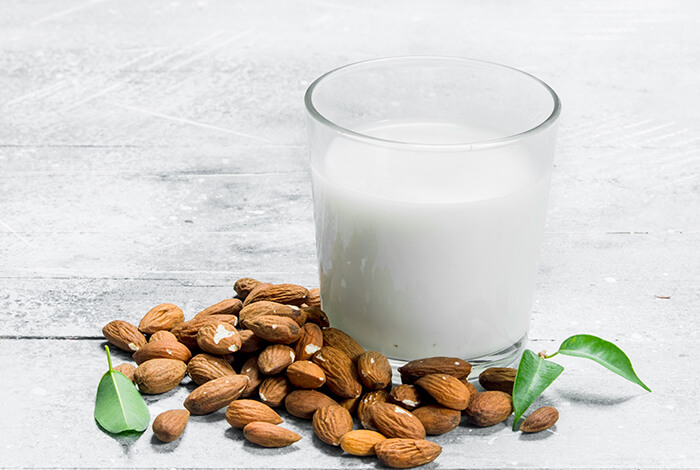
It can be a tedious process to keep checking which almond milk products contain xylitol, chocolate, or carrageenan. So why not make this beverage at home for Fido? Follow these simple steps:
- Soak 1 cup of almonds in water for 1 to 2 days and then drain.
- Place ½ teaspoon of salt, 2 cups of filtered water, and the soaked almonds in the blender. Blitz for 1 to 2 minutes or until the mixture forms a paste-like consistency.
- Use a nut milk bag or cheesecloth to strain the almond paste into a bowl.
- Squeeze until all the liquid in the paste is extracted. Throw out the pulp.
- Transfer the almond milk for dogs in a tightly covered bottle. It can be stored in the fridge for 4 to 5 days.
FAQs About Almond Milk for Dogs

1. Is It Okay for Dogs to Drink Almond Milk?
It is okay for dogs to drink almond milk, but in small amounts. This beverage contains an antinutrient called phytic acid, which impedes the proper absorption of a few minerals like iron, magnesium, and zinc.
Also, consider almond milk as one of your furry pal’s occasional treats. Sharing it with him daily could significantly affect the amounts of minerals his body metabolized from his regular meals.
2. Can You Substitute Almond Milk for Puppy Milk?
No, you cannot substitute almond milk for puppy milk for long-term use. This beverage is not specifically formulated for young dogs, meaning it cannot provide all the essential nutrients their developing bodies need.
However, if you are in a bind, you can use almond milk during emergencies. Just make sure to look for a suitable puppy milk replacer as soon as you can.
Extended intake of almond milk can lead to severe nutritional deficiencies, which can stunt a puppy’s growth and cause other health issues.
Conclusion

Can dogs have almond milk? Yes, it is a type of plant-based milk dogs can enjoy, especially if they suffer from lactose intolerance.
The beverage is a good source of vitamin D and antioxidants, which promote strong bones and immune systems.
However, be sure to share almond milk with your furry pal in moderation since it has antinutrients.
Always remember to check the ingredient list too. Ideally, it should not contain xylitol, chocolate, or carrageenan, as they can harm your pet’s health.